Watch the 4-minute video
4:13 · English · Fictional examples. The video loads from YouTube only when you press play. Watch on YouTube
An observation becomes useful for a medical decision when its context, possible meaning and uncertainty are clear. The team then needs to decide whether to investigate, act, monitor or take no further action. Recording a comment is the beginning of that process; the interpretation and decision still require review.
This article provides a practical workflow and a companion Medical Insights Tracker and Action Planner. The workbook separates observations from interpretations, records review decisions and connects each action to a stable Insight ID. Its fields and checks support documentation. They do not validate a scientific claim or establish patient benefit.
Start with the medical question
A focused question makes collection and review more useful. For example, a team investigating referral pathways could ask where uncertainty exists and what information would clarify it. A discussion can also reveal an unexpected issue outside the current plan. Record that issue faithfully rather than forcing every comment into a predetermined theme.
The professional MSL position statement identifies insight gathering within the role and emphasises scientific exchange that is independent of sales objectives. This supports a medical purpose for insight work rather than using favourable comments or prescribing intent as a measure of success. [1]
Separate three different records
| Record | Purpose | Example wording |
|---|---|---|
| Observation | Describe what was reported or observed. | One expert described variation in two referral steps. |
| Interpretation | Explain what the observation might mean. | Referral pathways may differ between settings. |
| Decision | Document what the team will do and why. | Review the available evidence before changing the plan. |
The example is invented. Its wording illustrates the difference between a report, a tentative explanation and a decision. It does not show that pathway variation exists in any country or that it changes outcomes.
Keep the source recoverable
Capture the observation date, source channel and an anonymised reference to the approved source record. Add the country, therapy area, medical objective and context. Note whether the statement reflects one individual, a meeting discussion or a published study. Avoid converting a paraphrase into a direct quotation or a group discussion into several apparently independent observations.
Review meaning before agreeing an action
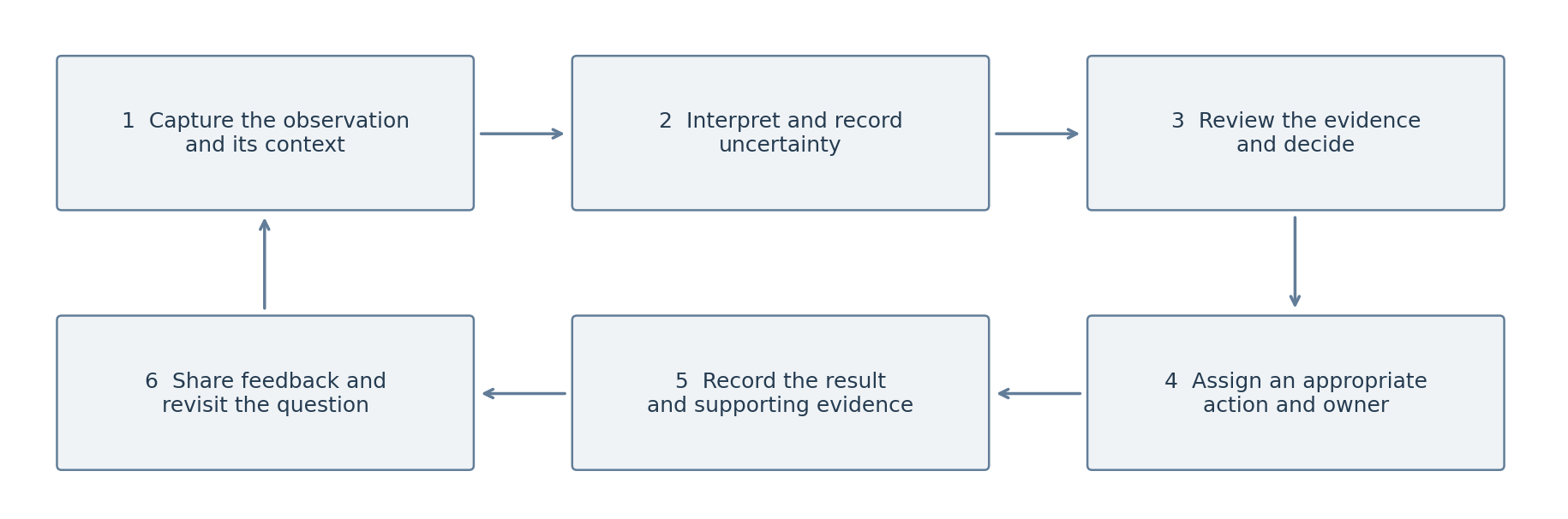
Figure 1. Proposed workflow for the companion tracker. A review may lead to monitoring or no further action. Arrows show a documentation sequence, not evidence of clinical causation.
The MAPS white paper describes collecting, reviewing, integrating and sharing medical insights, linking them to action and returning feedback to the people working with external stakeholders. It also highlights the importance of defined objectives and governance. These are professional recommendations for an operating process. [2]
Review the interpretation with its limits
Ask what evidence supports the interpretation, what could explain it differently and what information is missing. Compare relevant observations without erasing differences in setting or perspective. Repeated comments from the same meeting or professional network should not automatically be treated as independent corroboration. Record contradictory information as well as agreement.
A single credible observation can justify a proportionate investigation. Several similar observations may justify closer review, but their frequency in an engagement log is not an estimate of prevalence. The tracker has no sampling frame or denominator for a clinical population. It cannot establish how common a problem is.
Cochrane guidance for formal qualitative evidence synthesis considers relevance, methodological limitations, adequacy and coherence when assessing confidence in a synthesised finding. [3] These considerations illustrate why context and evidence quality matter. An operational insight log does not become a systematic review by adopting similar questions, and this workbook does not implement GRADE-CERQual.
Make priority a transparent judgement
Use the workbook’s High, Medium or Low labels to organise attention, then explain the choice in Priority rationale. Consider relevance to the medical objective, the possible consequence of leaving a question unanswered, the uncertainty and the resources needed for a proportionate next step. A priority label does not establish the truth of the interpretation.
Record a decision even when no action is needed
Reviewed means that a reviewer, review date and decision have been documented. The decision can be to investigate, monitor, use an existing approved process or take no further action. Record the reason. Archive an observation when appropriate without deleting its context. A new activity is not necessary for every observation.
A fictional example in the companion tracker
The workbook contains three invented insights and three invented actions. DEMO-INS-001 is the main worked example below. All dates, statements and roles are illustrative and should be cleared from a customer working copy before live use.
| Field | Example record |
|---|---|
| Insight ID | DEMO-INS-001 |
| Observation and context | On 10 September 2026, one fictional expert described variation in two referral steps during a discussion in a specialist setting. |
| Interpretation | Referral pathways may differ between settings. |
| Evidence and uncertainty | No published evidence has been reviewed yet. Frequency, causes and implications remain unknown. |
| Priority and rationale | High because the observation relates to the current pathway evidence question. |
| Review decision | Medical Lead A reviewed the record on 15 September. Investigate further and review evidence before changing the plan. |
| First action | DEMO-ACT-001: review and prioritise pathway evidence questions. Completed on 19 September; two questions added to a draft plan. |
| Second action | DEMO-ACT-002: scope a literature review. Due 1 October and still In progress at the 5 October review date. |
| Feedback | An update on the first action was shared at the team review on 21 September. Further evidence review remains outstanding. |
Follow the relationship between records
One insight can require more than one action. Each action receives its own Action ID and references the same Insight ID. The workbook retrieves country and therapy area from the linked insight. Changing the country on Insights updates both linked action rows. A missing or duplicated Insight ID displays a warning instead of choosing a record silently.
Distinguish a deliverable from resolution
Adding two questions to a draft plan is a planning deliverable. It does not demonstrate that the original uncertainty has been resolved. The completed first action and overdue second action can exist together. Review the result against the original question and decide whether additional evidence or follow up is still required.
The wider Stakeholder Strategy and Engagement System can support the same observation, interpretation and action sequence within a broader strategy workflow. This standalone tracker does not synchronise with that system. If records are transferred, map identifiers and confirm the relationships manually.
Use the tracker for a practical team review
Prepare the working copy
Save a customer copy of the workbook. Clear the three demonstration rows in Insights A13:V15 and Actions A7:K9 using Clear Contents. Retain the grey formula cells. Set the review date in Insights B4. The workbook prepares 200 insight rows and 200 action rows. All cells are editable and no sheets are protected.
Amber cells are manual inputs. Grey cells hold calculations and can also be edited, but replacing a formula removes that calculation. Country and therapy fields accept free text. Dropdowns suggest standard workflow labels; custom entries are allowed and may be flagged by the record checks. The Guide explains how to extend all bounded ranges if capacity is exceeded.
Read the summary with its scope
| Measure | Definition in this workbook |
|---|---|
| Insights recorded | All nonblank Insight IDs in the 200 prepared rows, including archived and incomplete records. |
| Reviewed insights | Populated insight rows with the standard Reviewed label. |
| High priority insights | Populated insight rows with the High priority label. |
| Open actions | Populated action rows labelled Open or In progress, across all dates. |
| Overdue open actions | Open or In progress actions with a numeric due date earlier than Insights B4. |
| Completed actions | Populated action rows labelled Completed. Review the result and feedback fields before relying on the count. |
These totals include all prepared records. Filtering a table by country, therapy or status does not change the summary counts. Due today is shown separately in the action row. Completed and Cancelled actions show Closed. Missing due dates and unrecognised statuses are identified in the due status or record check columns.
Review the substance behind the count
• Can the team recover the source and understand its context?
• Does the interpretation reflect the observation and the remaining uncertainty?
• Is the priority reason clear and the review decision justified?
• Does each agreed action have an owner, deadline and intended outcome measure?
• Do completed actions have result evidence and feedback to the team?
• Does the medical question remain open after the deliverable is completed?
Record checks identify selected omissions, duplicates and broken links. They do not review scientific accuracy, all possible date errors or compliance. A Core fields present message describes documentation completeness only. Duplicate or incomplete records can still appear in the headline counts, so inspect the flagged rows before reporting.
Maintain an appropriate evidence and feedback process
Give each stage a clear owner
Agree who captures observations, who reviews interpretation and who can approve an action. Define the recipients and timing of feedback. A practical review may group records by theme and compare their source contexts, then record decisions and outstanding questions. The cadence should fit the team’s workload and the question’s urgency; the workbook does not impose a universal target.
Keep safety and request handling in their approved systems
The MAPS white paper places privacy and governance within the insights operating model. [2] Use nonidentifying summaries and organisation approved storage for real records. Route adverse event information, product complaints and medical information requests through applicable approved procedures and timelines. An insight entry or action deadline does not replace those processes.
The workbook provides no automatic notifications, audit trail, controlled access or system integration. It is a documentation aid for a defined working process. Use a controlled copy and the appropriate approved system where those capabilities are required.
Before sharing an insight summary
• Describe the source scope and relevant context.
• Separate observed statements from the reviewer’s interpretation.
• State the evidence considered and what remains uncertain.
• Explain the decision, its rationale and any proportionate action.
• Give the owner and follow up date, then return the result to the team.
References
1. Theron P, Britland M, Holder D, Ikeda Y, Rewers RF, Tiku A. Promoting Best Practices for Medical Science Liaisons Position Statement from the APPA, IFAPP, MAPS and MSLS. Therapeutic Innovation & Regulatory Science. 2021;55:1139–1144. doi:10.1007/s43441-021-00310-y.
Read the professional position statement
2. McLoughlin M, Jonkman M, Zivkov M. Building Medical Insights Capabilities in Medical Affairs Organizations. Medical Affairs Professional Society, Insights Focus Area Working Group. Undated white paper. Sections on objectives, process, recipients and governance.
3. Noyes J, Booth A, Cargo M, Flemming K, Harden A, Harris J, Garside R, Hannes K, Pantoja T, Thomas J. Chapter 21 Qualitative evidence. Last updated October 2019. In Cochrane Handbook for Systematic Reviews of Interventions, version 6.5. Cochrane, 2024. Section 21.12.
Read the Cochrane methods chapter
Sources accessed 5 October 2026. The references support the cited professional or methodological principles. The workflow, fields and examples are proposed practical approaches and have not been clinically validated. Companion file: Medical Insights Tracker and Action Planner version 1.0.
Medical Insights Tracker and Action Planner
Explore the workbook, its instructions and its fictional examples before adapting it to your team.
View the matching workbook